Showing posts with label France. Show all posts

11 December 2015

Friday Flag - The United Kingdoms of England and France


In 1120 William Adelin survived the wreck of the White Ship. He went on to become King of England continuing the line of the House of Normandy. There would be no succession crisis as William III took the throne in 1135 at the age of 32. England remained stable and William III produced an heir.

War with France in the early 13th century allowed for expansion of England's territory. The Anglo-French War of 1201 to 1212 was waged by King Robert III, and was a decisive English victory. Phillip II of France was killed in 1212 and his son Louis VIII became King of what remained of France.

The Albigensian Crusade allowed the English to complete their domination of France as they crushed the Cathar in the name of the Catholic Church. In 1228 Louis VIII lost his throne as France became part of the Kingdom of England.

In 1235 the flag of of the United Kingdoms of England and France was issued. The United Kingdoms would continue to dominate European and then world politics for centuries.

09 May 2014

Friday Flag - Kingdom of Burgundy


The Hundred Years' War went better for England and Burgundy. Philip the Good was less inclined to make peace with King Charles VII of France, blaming the king for the death of Philip's father. Philip had also gotten used to his lifestyle and knew it would be easier for him to maintain as a king than as a Duke under Charles.

The Third Kingdom of Burgundy has problems early on with the Church, there were many in the Church who did not want to see France split. The Holy Roman Empire was also a thorn in its side. Luckily none of the skirmishes between the two became an all-out war. The support of the English became important in such affairs, and this dependence did not please many in Burgundy.

When the 'New World' was discovered Spain and Portugal quickly moved to exploit South America. A diminished France would join them in the south. England and Burgundy became the dominate European powers in North America a century later.

11 April 2014

Friday Flag - Saint Lawrence


In 1788 when the United States Constitution was being ratified by many of the States. By the end of the year only Rhode Island and Saint Lawrence had not ratified the document. The French-speaking and culturally different inhabitants of the colony had too many differences to the British-stock Americans. In 1789 Rhode Island joined the Union but Saint Lawrence finally declined to join the new political entity.

Saint Lawrence formed its own government. It's flag has a field of blue in the canton with white symbols to represent its provinces, inspired by the American flag. The main field of the flag is red to represent the blood shed during the Revolution and during the years of British oppression. A single white stripe to represent the first province is near the end of the fly end of the flag.

By 1800 the flag has three Fleur-de-lis. They represent the Provinces of Saint Lawrence and Quebec while the third represents the unorganized territories around the great lakes.

23 February 2014

This Week in Alternate Histories - February 17 to 23

Here is something new. A quick review of events that took place from February 17 to 23 at some point in the history of a number of the alternate timelines I've created so far. Not sure if I'll do this every week. Let me know what you think.

February 17: 2002 - French Foreign Legion is deployed to Algeria to hunt down Al-Qaeda operatives in that region. It is the beginning of yet another long and costly French occupation of that land. [Alpha-007]

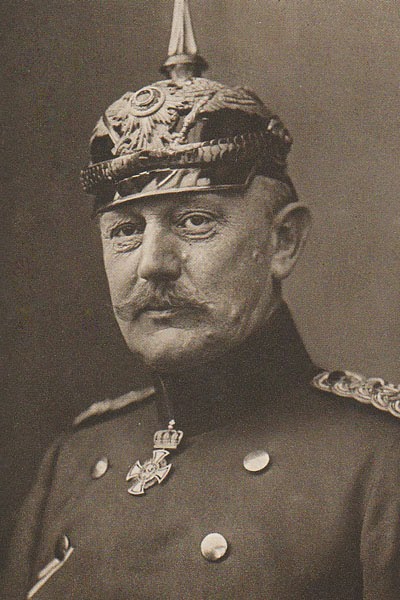
February 18: 1916 - Helmuth Johann Ludwig von Moltke (Moltke the Younger) dies of heart failure at the age of 67. He was the architect of German successes against Russia in the early days of war before his retirement due to failing health. [Alpha-012]


February 19: 2693 BC (2714 GC) - Lophrotus warlord, Lethclyda, commands a fleet of large war canoes across the sea to sack the coastal capital of Văn Lang in what would be known as Indochina in other timelines. The death toll to the humans is large and most of the settlement is put to the torch. Weeks later the new capital of Văn Lang would be established further inland for protection. [Beta-002]

February 20: 2004 (2575 AUC) - The main generator of the Roman Luna Colony Alpha suffers a critical failure. Safety protocols keep the reactor from melting down. Rapid response from nearby colonies help keep the death toll at only six with over a hundred in need of medical attention for excessive radiation exposure. [Alpha-005]

February 21: 1859 - Oregon is admitted to the United States of America as a state. They choose to be a free state and elect John Whiteaker, a Democrat, as governor. [Beta-001]

February 22: 1894 - The Governor of Texas, James S. Hogg, is shot and killed during a misunderstanding as he was poaching on government land. [Alpha-008]


February 23: 1916 - Portugal refuses British demands that they seize over 70 German vessels that are in Portuguese ports. This leads to a sharp decline in relations between the two nations. [Alpha-001]

NOTES
Some wikipedia articles for further information:
*Moltke the Younger (source for image)
*Văn Lang - ancient civilization
*James S. Hogg (source for image)

08 November 2013

Friday Flag - Travaillis Republique Democratique


This is the flag of the Travaillis Republique Democratique. France fell to communism in 1926 and adopted this flag shortly thereafter. The flag was in use until the collapse of that government in 1953.

12 June 2013

The Richelieu (R91)

French Aircraft Carrier
Name:Richelieu (R91)
Ordered:3 February 1986
Laid down:14 April 1989
Launched:7 May 1994
Commissioned:18 May 2001
In service:Still in service as of 2013
Homeport:Toulon, France
General Characteristics
Class:Unique aircraft carrier
Displacement:37,085 tonnes (42,000 tonnes full load)
Length:261.4m (858 ft)
Beam:64.36m (211.2 ft)
Draught:9.43m (30.9 ft)
Propulsion:2 x K15 pressurized water reactors (PWR), 150 MW each.
4x diesel-electric.
2xshafts
Speed:27 knots (50 km/h)
Range:unlimited distance; 20-25 years
Endurance:45 days of food
Capacity:800 commandos, 500 tonnes of ammunition
Complement:Ship's company: 1,350; Air wing: 600
Armament:4x8 cell A-43 Sylvester launchers carrying the MBDA Aster 15 surface to air missile.
2x6 cell Sadral launchers carrying Mistral short range missiles.
8xGiat 20F2 20mm cannons
Aircraft carried:28-40 aircraft


The flagship of the French Navy. The Richelieu is the first French nuclear powered aircraft carrier. The Charles de Gaulle has been under construction since 2007 and will become the second once it completes its shakedown by 2015.

ACTIVE SERVICE
Link 16
On 11 October 2001, the frigate Cassard, four (4) AWACS aircraft and the Richelieu were involved in the successful trial of the Link 16 high-bandwith secure data network.

11/9 and the War on Terror
After the terrorist attack on Paris on 11 September 2001 the Richelieu was deployed to the Indian Ocean as part of Operation Eternal Justice. The ship was made the centerpiece of the NATO fleet in the Arabian Sea allowing France to control many operations in the conflict. American forces took the French lead but were never under French command. Contre-Amiral François Cluzel was theoretically in command of the entire NATO fleet, but American forces were independent.

Air battle over Arabian Sea
On 9 July 2004 eight (8) Pakistani fighter jets (all F-7PGs) flew out of Pakistani air space over Arabian Sea. They were making a line for the French task force at top speed. Four French Super Étendard intercepted them before the fleet launched missiles. All of the Pakistani fighters were destroyed and one of the French jets went down after suffering damage. The French aircrew and two of the Pakistani pilots were pulled from the waters.

President Pervez Musharraf claimed that the air group was a rogue element not operating under authority of the government of Pakistan. This incident is seen as the primary cause of Musharraf leaving office in 2005.

Invasion of Libya
In 2005, after the tracking of additional terror attacks in France to Muammar Gaddafi, Operation Harmattan begins with a massive NATO air campaign on Libya prior to 100,000 American, French, and British troops making a massive amphibious invasion (the amphibious assault portion under American command as Operation Shores of Tripoli).

The Richelieu coordinated the air campaign during the ten day bombing campaign. Afterwards her aircraft were responsible for covering the French and British transports making the assault on the beaches. During this campaign four aircraft from the Richelieu were shot down by anti-aircraft.

Overhaul
In December 2007 the Richelieu's first major overhaul began. Numerous improvements were made including new propellers which increased her speed. New weapon systems and fighters were added as well. The refit was completed in January 2009.

Mediterranean Operation
From March 2009 to May 2012 The Richelieu stayed in the Mediterranean Sea. Its mission was to support NATO operations in North Africa. The United States had by this point taken over fleet operations in the Arabian Sea.


DIVERGENCE POINT
The divergence point for this universe is 1985. The Greenpeace ship, Rainbow Warrior, was not destroyed by the French who decided it might be too politically dangerous to do so. Prime Minister Laurent Fabius does not have to give a statement on the incident which is one of a number of events that hurt his career as Prime Minister. Without the Rainbow Warrior incident he may have held on to his position long enough so that the Richelieu's name would not be changed to the Charles de Gaulle. At least that is the concept, given my very limited knowledge of French politics.

Beyond that a more aggressive French military would be required for the other changes. Perhaps the change of the Prime Ministers would lead to the French having a much more active role in Desert Storm in 1991. Then al-Qaeda would have to determine that attacking France on September 11 would be of greater benefit than attacking the United States.... not a very likely outcome no matter what France did in Desert Storm and beyond. Perhaps this timeline requires a second point of departure.

REAL WORLD FOOTNOTES
This ship is known as the Charles de Gaulle in the real world. The source of the image for the ship is the Wikipedia article on the Charles de Gaulle. That article was used as the inspiration and basis for this post.

26 May 2013

Travaillis Republique Democratique

1852: Foundation of the Second French Empire.
1856: French victory in the Crimean War. Napoleon III expands his military further after this war. He institutes training of new troops by the experienced soldiers from this conflict.
1859: French victory over Austria in the Second Italian War for Independence. France begins to modernize its army and increase its size for coming conflicts.
1861: French invade Mexico. They have a long string of victories. In order to gain the time needed to consolidate their gains they secretly being to fund the Confederate States of America and smuggle modern weapons to them.
1863: Second Mexican Empire is declared, allied with France.
August 1865: The American Civil War ends with a northern victory. America turns its sights on the French intervention in Mexico.
1867: While in a better position to resist America invading Mexico, Napoleon III decides to withdraw his forces form North America. While he believes his forces could defeat the Americans who knew the price his troops would pay fighting battle-hardened Union and ex-Confederate armies would be too high.
With the growth in strength of the Prussians the French also didn't want to deplete their military with major operations in North America. His agents in America note the speed American troops can be moved across railroads. Napoleon III orders the expansion of rail lines in France to facilitate the movement of his own troops at home.
19 July 1870: Beginning of the Franco-Prussian War.
18 August 1870: After a number of German victories or stalemates in the war the Battle of Gravelotte takes place. The enhanced French rail network, improved artillery, and additional troops give the French an overwhelming victory. The Germans suffer 25,237 killed, 35,000 wounded and have their army routed. Over twenty-thousand German troops are captured.
1871: French forces cross the frontier into Germany. Bismark begins to loose control of the various German states and chaos begins to overtake the German military command. This leads to a French victory in the Franco-Prussian War.
1921: General War in Europe begins. France and Austria unite to divide Europe. Russia, Britain, and the various German states oppose them.
1923: The Ottoman Empire joins Austria and France in the war in order to counter aggressive Russian moves towards Constantinople. Benito Mussolini is assassinated during this period.
1924: The United States joins with Britain and its allies against the French menace. Italy, seeing an opportunity to regain Italian lands held by Austria also joins the allied cause.
1926: General War ends with an Allied victory and French loss. France looses Alsace and Lorraine. France is also thrown into chaos and falls to Communist revolution, forming the Travaillis Republique Democratique.
1930: German Confederation forms.
1936: Spanish Civil War begins. Communists from France intervene.
1937: Start of the Second Sino-Japanese War.
1939: Red victory in Spanish Civil War.
1940: Spain joins the Travaillis Republique Democratique.
1941: After civil unrest across Belgium, it too joins the TRD. The Japanese Empire attacks the United States of America, bombing Pearl Harbor.
1942: The TRD annexes Alsace and Lorraine form the German Confederation. The international community doesn't see it being worth fighting over.
The Communist Party grows in Italy.
1943: American advances against Japan. Russia invades Japanese-held Korea.
1944: Japan negotiates an end to the war with Russia and America.
Communist uprisings begin in Italy.
Ethnic unrest in Russia.
1947: Increasing violence in Italy as various Communist and Socialist organizations increase in power and have increasing conflicts with the government.
1949: TRD troops enter Italy after a major riot. European powers threaten the TRD.
Giacomo Matteotti leads the Italian Communists.
Serbia expands its territory by seizing some Italian ports on the eastern shore of the Adriatic.
By the end of the year the Red War begins.

1953: After devastation of parts of central Europe and France the Red War ends. Communism has been defeated and is outlawed in Europe. The decisive factor was the use of an atomic bomb by the British on the French city of Bordeaux.
1970: Grand Alliance of Europe forms. It is a very weak international organization dedicated to ending all wars in Europe.
1976: Australia joins the United States. The American flag now has 56 stars.
2001: Muslim terrorists stage major attacks on Constantinople and Moscow. Russia declares a “War on Terror.”
2008: Russian Empire collapses under the strain of the War on Terror and the growing civil war in its borders.
2013: Sixty year anniversary of the fall of the TRD.

This timeline is a brief introduction to the world that will be the basis of my entry for the Double-Blind What If Writing Contest over at Alternate History Weekly Update. I created it so I could have a better understanding of the point-of-view of the inhabitants of that world as I work on my entry. Thought I would share.
Related Posts Plugin for WordPress, Blogger...