Showing posts with label USA. Show all posts
03 May 2016
US Presidential Election 1964
In April 1961 a CIA backed operation to overthrow President Charles de Gaulle's government was successful. General Maurice Challe strengthened ties with the United States and pushed to make France an important member of NATO. In return for French cooperation the US began to send advisers and equipment to Algeria to aid France in its war there. The Soviet Union smuggled weapons to the Algerians and moved some of their own soldiers from the Muslim regions of the USSR to the combat zone. Algeria quickly became an important proxy war between East and West.
President Kennedy was forced to increase the assets sent to Algeria over the next few years. In 1962 Marines and Naval air assets took direct action in the conflict shortly followed by US Army ground forces. This was taking place as the President was also increasing commitments in Vietnam. The American people would not stomach two major foreign wars, so by 1964 the few advisers in Vietnam were withdrawn, leaving that country open for conquest by communist forces. Efforts were then re-doubled in Algeria. Rumblings of a return of the draft angered more Americans.
In 1964 nearly all of Algeria was occupied by Franco-American forces. However the Algerians would not surrender. The press turned on the western allies as atrocities were uncovered. This did not help the reelection campaign of Kennedy. He was able to distance himself from the worst events taking place in Africa, the American people easily placing blame on the French. Russian media focused on blaming the 'Vichy' dictators that controlled France in an attempt to create chaos in France and hopefully have them drop out of NATO.
Barry Goldwater obtained the Republican nomination to run for President. While he was also anti-Soviet he saw the disaster the war in Algeria was. He wanted to withdraw from Algeria and leave it to the French so that America could confront the Russians on other fronts. This alone may have given him victory in November, but his anti-union and anti-New Deal positions frightened too many others.
November 3, 1964 saw an above-average voter turnout. President Kennedy retained his power. Despite his loss, Goldwater continued to try to change the Republican party.
Labels:
Delta-003,
Divergence 1961,
Election,
USA
24 September 2015
Chilean-American War
The ascendancy of Chile after the War of the Pacific also lead to an increase in tensions between Chile and the United States. The 1885 Panama Crisis was one example of this tension. During the Chilean Civil War of 1891 the Itata incident saw the US seizing a ship carrying weapons to the Congressist faction in the conflict. The US was attempting to increase its influence in Chile by supporting President José Manuel Balmaceda.
Balmaceda lost the war to the Congressist faction. A month after the war was over the USS Baltimore arrived in the Chilean port of Valparaiso. On 16 October 1891 outside a saloon in Valparaiso an American sailor spit on a picture of a Chilean hero. In the resulting riot two US sailors were killed and over a dozen were injured. Many of the sailors involved were arrested by the local authorities. The new Chilean government, already upset with US actions during the civil war, rejected all of America's protests.
Secretary of State James G. Blaine had recently died of the chronic illnesses he suffered from. Without his advice President Harrison continued his bellicose rhetoric against Chile. On 11 December 1891 the Chilean response to Harrison arrived. By the afternoon President Harrison was asking Congress for a declaration of war against Chile. On 18 December 1891 The US Congress vote was 292 to 21 in the house and 39 to 35 in the Senate as a Joint Resolution.
The US military was unprepared for a a war with Chile. Construction of new ships and transports began while volunteers were being trained. By mid-April 1892 a force was ready to be deployed. 12 August 1892 saw the city of Iquique occupied by over 5,000 American troops.
During the months after the Declaration of War, Chile began to move its own forces to the northern portion of the country to counter any American invasion. While spread out over a large area, 40,000 Chilean troops were available, many of them battle-hardened during the civil war. While the Americans had better equipment they had long supply lines and were outnumbered by a foe who was fighting for their homes.
The US Navy was able to dominate the local waters. Only small naval encounters played out with the Chilean Navy resorting more to commerce raids on American commercial vessels. The blockade of Iquique and other northern ports was secure.
However, on 21 September 1892 a large-scale operation against the occupied territories was successful. Over 1,000 US soldiers died, most of the others were wounded and/or captured. It was a major disaster with only 413 escaping by sea. While America held the sea now Chile held 2,600 prisoners of war. More troops and ship were being produced in the United States and a larger, more powerful relief force would soon be ready.
The disaster in Chile spelled defeat for Harrison at the ballot box in November. Grover Cleveland won the election and had to plan how he would handle the war.
In late January 1893 the first 10,000 soldiers of a 100,000 force arrived in Peru as a staging area. The number increased to 25,000 by March 1893. Disputes between the US Army and US Navy as well as supplying the troops were problems. A planned two-pronged attack on Iquique and Coyhaique province were planned. Future arrives would reinforce which ever front needed it.
President Cleveland took office on 4 March 1893 just a week before the planned offensive. The President put the offensive on the back burner and opened diplomatic channels with Chile. He felt that enough people had suffered and died over a bar fight. The public backlash was high against Cleveland with unrelenting assaults by the press on a daily basis. The blockade of Chile was kept in place during negotiations. By June he submitted a treaty to the Senate. The treaty would see to the release of all prisoners, including the arrested crew members of the Baltimore, and the US would pay $200,000 in gold for damages to Iquique and from the blockade. The treaty only received 33 of the 59 votes it needed. They country was at war with a Commander-in-Chief who didn't want the war and a Senate that didn't want to end it.
Disease struck the military camps in Peru during August so any military operations would have to be delayed. During the three worst months of the outbreak over 3,800 Americans died. This delay did allow President Cleveland to try to acquire Easter Island from Chile in order to sweeten the deal for the Senate. By having the reparations be considered a purchase it might have a chance of passing.
November 1893 public pressure in the United States was forcing Congress' hand regarding the war. Despite the Democratic majority in the House a call was made to begin impeachment proceedings against the President for failing to carry out his duties as Commander-in-Chief, that failure leading to the loss of thousands of men to malaria and other tropical diseases as thousands of others suffered in prison camps.
On 15 December 1893 the President finally broke under the pressure. He resigned his office and Adlai Stevenson I was sworn in as the new President. Stevenson quickly organized a new campaign on Chile. Heavy fighting over the next four months on three fronts forced Chile to surrender on 14 May 1894. Five thousand additional Americans died, over 10,000 Chilean troops and thousands of civilians due to indirect fire, lack of supplies, and disease.
President Stevenson
The United States seized Easter Island and claimed $250,000 in reparations from Chile. Most of the money would never be paid as on June 3, 1884 Peru and Bolivia both declared war on Chile.
Grover Cleveland is actually one of my favorite presidents so I hope I didn't make him seem too much of a wuss in this alternate history. Perhaps he would have had no problem continuing a silly war since Britain did have some influence in Chile at the time... not sure if they had as much after the Chilean Civil War of 1891.
1) The Baltimore Crisis
2) United States intervention in Chile
3) Baltimore Affair
4) Adlai Stevenson
Balmaceda lost the war to the Congressist faction. A month after the war was over the USS Baltimore arrived in the Chilean port of Valparaiso. On 16 October 1891 outside a saloon in Valparaiso an American sailor spit on a picture of a Chilean hero. In the resulting riot two US sailors were killed and over a dozen were injured. Many of the sailors involved were arrested by the local authorities. The new Chilean government, already upset with US actions during the civil war, rejected all of America's protests.
Secretary of State James G. Blaine had recently died of the chronic illnesses he suffered from. Without his advice President Harrison continued his bellicose rhetoric against Chile. On 11 December 1891 the Chilean response to Harrison arrived. By the afternoon President Harrison was asking Congress for a declaration of war against Chile. On 18 December 1891 The US Congress vote was 292 to 21 in the house and 39 to 35 in the Senate as a Joint Resolution.
The US military was unprepared for a a war with Chile. Construction of new ships and transports began while volunteers were being trained. By mid-April 1892 a force was ready to be deployed. 12 August 1892 saw the city of Iquique occupied by over 5,000 American troops.
During the months after the Declaration of War, Chile began to move its own forces to the northern portion of the country to counter any American invasion. While spread out over a large area, 40,000 Chilean troops were available, many of them battle-hardened during the civil war. While the Americans had better equipment they had long supply lines and were outnumbered by a foe who was fighting for their homes.
The US Navy was able to dominate the local waters. Only small naval encounters played out with the Chilean Navy resorting more to commerce raids on American commercial vessels. The blockade of Iquique and other northern ports was secure.
However, on 21 September 1892 a large-scale operation against the occupied territories was successful. Over 1,000 US soldiers died, most of the others were wounded and/or captured. It was a major disaster with only 413 escaping by sea. While America held the sea now Chile held 2,600 prisoners of war. More troops and ship were being produced in the United States and a larger, more powerful relief force would soon be ready.
The disaster in Chile spelled defeat for Harrison at the ballot box in November. Grover Cleveland won the election and had to plan how he would handle the war.
In late January 1893 the first 10,000 soldiers of a 100,000 force arrived in Peru as a staging area. The number increased to 25,000 by March 1893. Disputes between the US Army and US Navy as well as supplying the troops were problems. A planned two-pronged attack on Iquique and Coyhaique province were planned. Future arrives would reinforce which ever front needed it.
President Cleveland took office on 4 March 1893 just a week before the planned offensive. The President put the offensive on the back burner and opened diplomatic channels with Chile. He felt that enough people had suffered and died over a bar fight. The public backlash was high against Cleveland with unrelenting assaults by the press on a daily basis. The blockade of Chile was kept in place during negotiations. By June he submitted a treaty to the Senate. The treaty would see to the release of all prisoners, including the arrested crew members of the Baltimore, and the US would pay $200,000 in gold for damages to Iquique and from the blockade. The treaty only received 33 of the 59 votes it needed. They country was at war with a Commander-in-Chief who didn't want the war and a Senate that didn't want to end it.
Disease struck the military camps in Peru during August so any military operations would have to be delayed. During the three worst months of the outbreak over 3,800 Americans died. This delay did allow President Cleveland to try to acquire Easter Island from Chile in order to sweeten the deal for the Senate. By having the reparations be considered a purchase it might have a chance of passing.
November 1893 public pressure in the United States was forcing Congress' hand regarding the war. Despite the Democratic majority in the House a call was made to begin impeachment proceedings against the President for failing to carry out his duties as Commander-in-Chief, that failure leading to the loss of thousands of men to malaria and other tropical diseases as thousands of others suffered in prison camps.
On 15 December 1893 the President finally broke under the pressure. He resigned his office and Adlai Stevenson I was sworn in as the new President. Stevenson quickly organized a new campaign on Chile. Heavy fighting over the next four months on three fronts forced Chile to surrender on 14 May 1894. Five thousand additional Americans died, over 10,000 Chilean troops and thousands of civilians due to indirect fire, lack of supplies, and disease.
The United States seized Easter Island and claimed $250,000 in reparations from Chile. Most of the money would never be paid as on June 3, 1884 Peru and Bolivia both declared war on Chile.
Grover Cleveland is actually one of my favorite presidents so I hope I didn't make him seem too much of a wuss in this alternate history. Perhaps he would have had no problem continuing a silly war since Britain did have some influence in Chile at the time... not sure if they had as much after the Chilean Civil War of 1891.
1) The Baltimore Crisis
2) United States intervention in Chile
3) Baltimore Affair
4) Adlai Stevenson
07 September 2015
Money Monday #6 - US Territorial Notes
With increasing tensions and threat of war with the Empire of Japan, the United States was determined to keep its money out of enemy hands if its territories were invaded. This idea eventually evolved into the 'Blue Back,' a territorial currency for use during the time of crisis. The first notes were issued in fall of 1941 and would be in circulation until 1948 (other than the Kamchatka-Chukotka & Philippines notes which were withdrawn after the 1942 invasion).
Each note had a letter designation for the territory it originated. If one of these territories fell to enemy forces the related money would automatically become contraband and have no value.
A: Hawaii
B: Alaska
C: Kamchatka-Chukotka
D: Philippines
E: Guam and other Pacific possessions
Over $580 million of territorial notes were printed. Various denominations and designations made up this total, mostly for Hawaii.
By the 1980s surviving 'Blue Backs' were worth quite a bit to collectors, especially the 'C' series.
Inspiration for this post came form the OTL Hawaii overprint notes issued during World War II.
31 August 2015
Wilson Assassinated!
Paris 1919. The victorious Allied leaders met to distribute the booty from the Great War. President Wilson arrived to push the principles of his Fourteen Points. But as the negotiations stretched on he abandoned more and more of his ideals and became obsessed with his idea for a League of Nations.
Wilson, Clemenceau, and Lloyd George had numerous discussions of the fate of the Ottoman Empire. The original ideals of self-determination were tossed aside as France and Britain fought over the new borders to be drawn across Asia Minor and the Middle East. Greek military forces were arriving to seize land for Greece, Italy demanded concessions, and America was offered a mandate over Armenia and Constantinople.
On 18 June 1919 the Allied leaders did something they didn't do for the other Central Power governments, they met with Turkish Prime Minister and his aides. Perhaps it was the general disdain the Allies had for the Ottoman Empire, or perhaps the meeting was just for show. Damad Ferid attempted to make a case for not destroying the Ottoman Empire. While neither Ferid nor his aides heard the discussions of the Allied leaders after they left it was apparent from their demeanor that they felt nothing but contempt for the Prime Minister.
Wilson was quoted as having "never having seen anything more stupid." Clemenceau and George were offended by the appeal.
Güvenҫ Peynírcí was one of the last minute additions to Damat Ferid's group. He had an ulterior motive for going to Paris. Once he realized from the looks his people received from the Allied leaders he knew he much take a more drastic course of action. The next day, 19 June, just before lunch, he managed to get close to President Wilson and fired three shots into the American leader.
Wilson died almost instantly. Peynírcí was captured and would be executed by the end of the year. However his deed was done. Thomas Riley Marshall was now the President of the United States. American outrage at the assassination would lead to a dreadful cycle of violence in the near East and the spread of Bolshevism into Turkey. America accepted the Armenian Mandate as well as governorship of Constantinople.
A Great War sparked by an assassination ended with another.
SOURCES
Some of the background details for this post were inspired by Margaret Macmillan's Paris 1919: Six Months That Changed The World. A brief account of Ferid's meeting with the Allied leaders was given on p.437 of the Random House trade paperback edition of that book.
Wilson, Clemenceau, and Lloyd George had numerous discussions of the fate of the Ottoman Empire. The original ideals of self-determination were tossed aside as France and Britain fought over the new borders to be drawn across Asia Minor and the Middle East. Greek military forces were arriving to seize land for Greece, Italy demanded concessions, and America was offered a mandate over Armenia and Constantinople.
On 18 June 1919 the Allied leaders did something they didn't do for the other Central Power governments, they met with Turkish Prime Minister and his aides. Perhaps it was the general disdain the Allies had for the Ottoman Empire, or perhaps the meeting was just for show. Damad Ferid attempted to make a case for not destroying the Ottoman Empire. While neither Ferid nor his aides heard the discussions of the Allied leaders after they left it was apparent from their demeanor that they felt nothing but contempt for the Prime Minister.
Wilson was quoted as having "never having seen anything more stupid." Clemenceau and George were offended by the appeal.
Güvenҫ Peynírcí was one of the last minute additions to Damat Ferid's group. He had an ulterior motive for going to Paris. Once he realized from the looks his people received from the Allied leaders he knew he much take a more drastic course of action. The next day, 19 June, just before lunch, he managed to get close to President Wilson and fired three shots into the American leader.
Wilson died almost instantly. Peynírcí was captured and would be executed by the end of the year. However his deed was done. Thomas Riley Marshall was now the President of the United States. American outrage at the assassination would lead to a dreadful cycle of violence in the near East and the spread of Bolshevism into Turkey. America accepted the Armenian Mandate as well as governorship of Constantinople.
A Great War sparked by an assassination ended with another.
SOURCES
Some of the background details for this post were inspired by Margaret Macmillan's Paris 1919: Six Months That Changed The World. A brief account of Ferid's meeting with the Allied leaders was given on p.437 of the Random House trade paperback edition of that book.
Labels:
Armenia,
Divergence 1919,
Gamma-003,
Ottoman Empire,
Turkey,
USA
28 August 2015
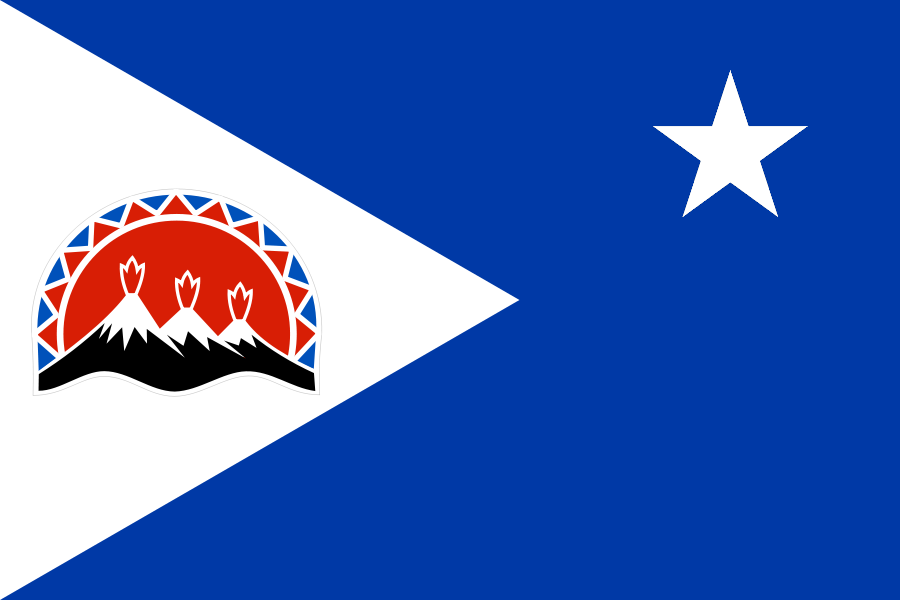
Friday Flag - Kamchatka-Chukotka Territory
As the Russian Civil War raged across east Europe and north Asia the United States of America sent an expeditionary force to help the White Russians. This force was sent to the Russian Far East and additional troops were sent in a show of strength against the Japanese. However, after regular interactions with Admiral Kolchak it became apparent that the Whites were doomed and the Bolsheviks would win the long, bloody struggle.
After spending lives and resources in a futile conflict it was decided to make the best of things by occupying the population centers of Kamchatka and Chukotka. In 1921 America offered Lenin relief supplies and money in return for the territories. Lenin, seeing the offered items as more useful in the struggle in Europe than in the far off tundra, agreed and sold the land. The Kamchatka-Chukotka Territory was born.
The discovery of gold and other unexploited resources brought immigrants from the US and other areas. Development began to take place. However the Second World War would derail this development.
In spring 1942 Japanese forced landed in Kamchatka-Chukotka and drove the remaining, limited, American forces into the wilderness. The difficulties of reconquest and the larger concerns in the Pacific lead to the territory being effectively abandoned. The United States spent more of its efforts in the Pacific than in Europe in the war as a result. A land invasion of Japan took place in 1944 and the Japanese surrendered in 1946.
The Soviet Union, under Trotsky, invaded and re-annexed Kamchatka and Chukotka in 1945. The United States was powerless to stop them. Soviet forces also occupied all of Germany as well as norther Italy as the European war ended in 1945.
Several thousand American soldiers who survived the Japaneses invasion were captured by the Soviets and few were ever returned home.
13 January 2015
Map of the United States of America circa 1910
Last January I was planning my own twist on the alternate American Civil War. Over the summer and fall of 2014 life happened so I didn't develop it as much as I wished. This map is a spoiler for that timeline - the rebellious northern states, due to their population and industry managed to break free of the United States to for the Federation of Free America.
After the north-eastern states broke away the United States quickly got involved in another war with Mexico. The French decided not to intervene which allowed America to annex new territory. The much weaker United States was seeing itself becoming more isolated with the French and British befriending the FFA. After Germany purchased Cuba from Spain on the 7th of June 1889 the United States worked to improve their relationship with the new German Empire.
Naval agreements between the FFA and British Empire became an increasing worry for the United States. They entered into a formal alliance with Germany in 1911, giving Germany access to additional ports in the Caribbean and Pacific as well as the growing American markets. In return Germany military advisers helped the USA modernize its military and gave financial assistance.
With the coming of the Great War the United States would join the Central Powers as the FFA would soon after join the Allies.
With the world war spreading to North America, the map would end up changing again...
04 July 2014
Friday Flag - USA
Welcome to this week's alternate history flag. Given that it is Independence Day here in the USA I decided to create an alternate flag for America. At first I considered one with an additional stripe and star for a timeline where Quebec was successfully added to the new nation, but instead I went with the theme of just changing the layout of the original flag.
Upon completion I found it bears a striking resemblance to a flag designed by John Shaw, his having eight-pointed stars instead of my five-pointed. Shaw's flag also had different dimensions, being a bit longer than most standard flags.
I hope all my readers, no matter which country they live in, have a great day and an even more awesome weekend!
29 June 2014
This Week in Alternate Histories - June 23 to June 29
JUNE 23
Alt-Timeline: Travaillis Republique Democratique
Year: 2014
The Brittany region of France finally achieves independence. Since the end of the war over sixty years ago Brittany had recovered more quickly and was more open to working with the UK & USA. On June 23 the Grand Alliance of Europe recognizes Brittany as an independent nation over French protests.
JUNE 24
Alt-Timeline: Alexander's Earth
Year: 2151 native calendar (AD 1820)
Nearly fifteen years after the Unknown War devastated the Earth, the inhabitants of Almazangrad emerge from their underground city and begin to explore the desolate area around their settlement. Initial explorations show only slightly elevated background radiation in the area around the city giving hope to the survivors of expansion and accumulation of desperately needed resources.
JUNE 25
Alt-Timeline: Alternate Great Lakes
Year: 1788
Virginia becomes the 9th state to ratify the US Constitution. Saint Lawrence has refused to join the new union.
JUNE 26
Alt-Timeline: Sino-Soviet Alliance
Year: 1945
The United Nations charter is signed. A controversial section of the charter allows for a formation of a UN military which would cause trouble when the Soviet Union fails to utilize its veto power at the start of the Korean War. In the future this would be seen as the primary weakness of the new organization and the rise of a more powerful international communist organization in the '50s.
JUNE 27
Alt-Timeline: British North America
Year: 1768
The Treaty of Fort Stanwix is signed between the British and the Iroquois Confederacy. It establishes the borders of Iroquois territory and creates provisions for the British to enforce violations by colonists.
JUNE 28
Alt-Timeline: Campi Flegrei
Year: 1955
A major Nazi air attack with most of their jet fighters breaks the back of the Red Army at the start of the Battle of Radom. This battle marked the limit of the Russian advance into Germany territory.
JUNE 29
Alt-Timeline: World War III
Year: 1963
An agreement is finalized with President João Goulart of Brazil and elements of the US Navy to use Brazilian ports for resupply in the aftermath of the nuclear exchange sparked by the Cuban Missile Crisis. The chaos of the global war and shifting weather patterns is causing problems worldwide, but the presence of the Navy vessels helps stabilize the ports and stimulates economic activity.
04 June 2014
Archibald Butt
Archibald Butt was a journalist and soldier turned Presidential Aide. He served under Teddy Roosevelt and then Howard Taft. The stress of the looming primary fight between Roosevelt and Taft caused him to vacation in Europe. He had time to consider the situation and his loyalties to both men.
On 17 April 1912 after arriving back in New York on the Titanic, Archibald quickly got pulled into Republican politics with the upcoming convention. On 18 June 1912 he attempted to mediate between the two men in an attempt to keep things from getting out of hand. Butt's apparent pro-Taft leanings infuriated Roosevelt and he had his delegates abstain in voting. TR was determined to be president, and if the Taft machine would not give him a fair shake he was determined to start a new party to get what he felt was rightfully his.
In August the Bull Moose Party had its own convention and Roosevelt was in the race. Three months later he came in second place to Woodrow Wilson, Taft a distant third. Archibald blamed himself for the disaster as he would later describe in his 1915 book The Election of 1912. He had plenty of extra time to write after Wilson was sworn into office on 3 March 1913, Butt was no longer a Presidential aide.
In 1916 He became one of the aides to Republican Presidential candidate Charles Evans Hughes. He made sure that Hughes kept appointments with officials in California. Butt was determined to make sure that Wilson lost, since he felt that the man should never have won in 1912. In November 1916 Hughes won a tight race 267 electoral votes to Wilson's 264.
FIRST WORLD WAR
With the revelation of the Zimmerman Telegraph and the renewal of unrestricted submarine warfare President Hughes went to congress for a declaration of war against the German Empire. Shortly afterwards Archibald Butt re-entered military service and was promoted to colonel. He was placed in charge of overseeing and coordinating the transportation networks in the United States to the amount Congress would allow under the emergency powers that were being drafted.
It was a tremendous, unprecedented task. Archibald performed better than could be expected. He contacted John Thayer, a man he met while on the Titanic in 1912. Thayer was a vice-president of the Pennsylvania Railroad and their close working relationship during the war helped move supplies from across the Great Lakes region to the Atlantic docks.
Despite the massive work required working for the Quartermaster General, Butt still found time to be socially active. He even helped establish an American branch of The Blue Cross organization from the UK. He was concerned with the fate of the multitude of animals being sent to Europe even before America's entry into the war. He had little to do with the organization after it was established, his other wartime duties taking so much time.
FINAL DAYS
With the end of the fighting the long process of the peace talks... or rather meeting to determine what terms would be forced on the Central Powers, Archibald continued his duties supplying the American forces in Europe. In 1920 he contracted the influenza and died several weeks later.
NOTES
I decided to explore what might happen in my Titanic survives timeline with the survival of one of the people who had died. Of course it is impossible to predict what would have actually happened, and by focusing on just one who would have died I'm ignoring the other 1,516. That is a lot of little butterflies, most of which would likely not have much of an immediate impact on the timeline.... but long term....
Maybe, if this post is popular enough, I'll return and pick some other former Titanic victims and make guesses about how their survival would have affected this timeline.
1) Wikipedia entry for Archibald Butt
2) Image source - United States Library of Congress's Prints and Photographs division
3) Some background on The Blue Cross, aka Our Dumb Friends League. Many animals played important roles duirng the First World War
4) I had Archie responsible for helping to establish an American branch of the Blue Cross since he had written some treatises on the care of animals in the tropics and even disobeyed orders to save the lives of some mules! He was also socially active and was one of the founding members of the Military order of the Carabao. Just seemed like a nice addition to his alternate self.
On 17 April 1912 after arriving back in New York on the Titanic, Archibald quickly got pulled into Republican politics with the upcoming convention. On 18 June 1912 he attempted to mediate between the two men in an attempt to keep things from getting out of hand. Butt's apparent pro-Taft leanings infuriated Roosevelt and he had his delegates abstain in voting. TR was determined to be president, and if the Taft machine would not give him a fair shake he was determined to start a new party to get what he felt was rightfully his.
In August the Bull Moose Party had its own convention and Roosevelt was in the race. Three months later he came in second place to Woodrow Wilson, Taft a distant third. Archibald blamed himself for the disaster as he would later describe in his 1915 book The Election of 1912. He had plenty of extra time to write after Wilson was sworn into office on 3 March 1913, Butt was no longer a Presidential aide.
In 1916 He became one of the aides to Republican Presidential candidate Charles Evans Hughes. He made sure that Hughes kept appointments with officials in California. Butt was determined to make sure that Wilson lost, since he felt that the man should never have won in 1912. In November 1916 Hughes won a tight race 267 electoral votes to Wilson's 264.
FIRST WORLD WAR
With the revelation of the Zimmerman Telegraph and the renewal of unrestricted submarine warfare President Hughes went to congress for a declaration of war against the German Empire. Shortly afterwards Archibald Butt re-entered military service and was promoted to colonel. He was placed in charge of overseeing and coordinating the transportation networks in the United States to the amount Congress would allow under the emergency powers that were being drafted.
It was a tremendous, unprecedented task. Archibald performed better than could be expected. He contacted John Thayer, a man he met while on the Titanic in 1912. Thayer was a vice-president of the Pennsylvania Railroad and their close working relationship during the war helped move supplies from across the Great Lakes region to the Atlantic docks.
Despite the massive work required working for the Quartermaster General, Butt still found time to be socially active. He even helped establish an American branch of The Blue Cross organization from the UK. He was concerned with the fate of the multitude of animals being sent to Europe even before America's entry into the war. He had little to do with the organization after it was established, his other wartime duties taking so much time.
FINAL DAYS
With the end of the fighting the long process of the peace talks... or rather meeting to determine what terms would be forced on the Central Powers, Archibald continued his duties supplying the American forces in Europe. In 1920 he contracted the influenza and died several weeks later.
NOTES
I decided to explore what might happen in my Titanic survives timeline with the survival of one of the people who had died. Of course it is impossible to predict what would have actually happened, and by focusing on just one who would have died I'm ignoring the other 1,516. That is a lot of little butterflies, most of which would likely not have much of an immediate impact on the timeline.... but long term....
Maybe, if this post is popular enough, I'll return and pick some other former Titanic victims and make guesses about how their survival would have affected this timeline.
1) Wikipedia entry for Archibald Butt
2) Image source - United States Library of Congress's Prints and Photographs division
3) Some background on The Blue Cross, aka Our Dumb Friends League. Many animals played important roles duirng the First World War
4) I had Archie responsible for helping to establish an American branch of the Blue Cross since he had written some treatises on the care of animals in the tropics and even disobeyed orders to save the lives of some mules! He was also socially active and was one of the founding members of the Military order of the Carabao. Just seemed like a nice addition to his alternate self.
11 April 2014
Friday Flag - Saint Lawrence
In 1788 when the United States Constitution was being ratified by many of the States. By the end of the year only Rhode Island and Saint Lawrence had not ratified the document. The French-speaking and culturally different inhabitants of the colony had too many differences to the British-stock Americans. In 1789 Rhode Island joined the Union but Saint Lawrence finally declined to join the new political entity.
Saint Lawrence formed its own government. It's flag has a field of blue in the canton with white symbols to represent its provinces, inspired by the American flag. The main field of the flag is red to represent the blood shed during the Revolution and during the years of British oppression. A single white stripe to represent the first province is near the end of the fly end of the flag.
By 1800 the flag has three Fleur-de-lis. They represent the Provinces of Saint Lawrence and Quebec while the third represents the unorganized territories around the great lakes.
05 March 2014
Book Review - The Divide
William Overgard's The Divide is an alternate history tale involving a world where the Axis Powers won the Second World War. From what I could tell history diverged at a couple points, one being the election of an isolationist President in the United States and the second being a change in Germany's tactics that allowed them a quick victory over Britain.
THE STORY
It is 1976. Two-hundred years since the Declaration of Independence and thirty years since the United States surrendered to the Axis. The elderly Hitler and Tojo plan a historic meeting in the center of America at a place they call the Divide. America has been a peaceful place for a number of years, no real uprisings, citizens being willing slaves to their German and Japanese masters. All that is about to change.
A number of people get involved in setting the stage for a new American Revolution. It starts with the bizarre assassination of a Japanese general on the Fourth of July. The story then jumps between various characters - the trio of freedom fighters and their interactions with other rebel elements, an SS officer tasked with destroying the resistance, and other people whose lives are touched by the ongoing events.
Pieces start to fall in place and all of the threads lead to the meeting of the two rulers at the Divide. There are plenty of set-backs and a few twists and turns along the way.
Overgard's style is interesting. There is a tendency to introduce new information and then spend a few pages telling the back-story of that new information, usually in the form of flashbacks. While this works in most cases, there were a couple of times I wished he would shorten some of the flashbacks and keep going with the events in the 'present'.
THE CHARACTERS
The Old Man (Wayne Stubbs) is the main character of the story. He has a checkered past involving accidentally injuring a prostitute, indirectly causing his wife to commit suicide, and then wounding another prostitute in an attempt to kill her while suffering the rage and despair following his wife's death. He then fled to Canada and eventually made his way back after America fell to the Axis. Not the most heroic of backgrounds but he now feels he has to make up for the past by saving the country's future.
The Cowboy (Cooper): This young man was raised by The Old Man. He was raised to be a hero and to be an inspiration for others in the coming revolution. He plays his role well but gets caught up in his first real encounters with women (he and The Old Man lived a very isolated and hobo-like lifestyle).
Claus Dieter is the antagonist from the SS. He is on the trail of the heroes after the July 4th assassination. He is an evil and deceitful man who, while smart, is usually in over his head. He tries to destroy the resistance while keeping his superiors from getting rid of him for any failures.
In addition there are numerous other characters, an Amerind girl, a Jewish woman who is putting the finishing touches on her father's bomb, and many others. Most of the characters are interesting and the liberal use of flashbacks in the novel gives us all the information we need about them.
FINAL ANALYSIS
A great story overall. I have mentioned the sometimes annoying use of flashbacks, but there were only a couple of places that this really bothered me. The ending, while it wrapped up the main story, did not reveal the eventual results of the new Revolution. In fact the last page was about Hitler's daughter being pregnant. I'm not sure if this was to set up a sequel or just to establish that history keeps chugging along, even after some really historic events take place.
As with life, there are not happy endings, just another day and new challenges following the last.
I gave this book 3 out 5 stars when I rated it on Goodreads. It's better than a three but not quite a 4. I was in a phase of not inflating my ratings with too many 4 and 5 stars.
PUBLISHER: Jove Publications, Inc.; copyright 1980 by William Overgard
GENRE: Alternate History
PAGE COUNT: 244
ISBN: 0-515-05492-5
28 February 2014
Friday Flag - United States of America
The flag of the United States of America under the Articles of Confederation and then the early days under the Constitution. The state of Saint Lawrence declined entry to either organization after the Revolution. The thirteenth stripe and star were removed from the revolutionary flag when the new nation was forged.
10 January 2014
Friday Flag - Federation of Free America
After the election of Steven A. Douglas as President of the United States a number of northern states seceded and formed the Federation of Free America (FFA).
07 January 2014
The Blue and the Green - Road to Secession
In 1861 sixteen northern states seceded from the Union as a response to the election of Steven A. Douglas as President. Decades of regional strife in Congress built up resentment in the North to harsh and invasive fugitive slave laws built the foundation of secession.
The trouble can be traced back to the counting of slaves towards representation in Congress. There were many arguments during the Convention over the issue. Eventually the slave-holding states agreed to pay any eventual Federal taxes on these slaves. The taxes never came.
Presidents of the United States
*George Washington [2 terms 1789 to 1797] - no political party
*Thomas Jefferson [2 terms 1797 to 1805] - Democratic-Republican
*George Clinton [2 terms 1805 to 1812] - Democratic-Republican
*Gideon Granger [1812 to 1813] - Democratic-Republican
*James Madison [1 term 1813 to 1817] - Democratic-Republican
*James Monroe [2 terms 1817 to 1825] - Democratic-Republican
*Andrew Jackson [2 terms 1825 to 1833] - Democrat
*Martin Van Buren [2 terms 1829 to 1841] - Democrat
*William Henry Harrison [1 term 1841 to 1841] - Whig
*John Tyler [1841 to 1845] - Whig
*Jams Polk [1 term 1845 to 1849] - Democrat
*Zachary Taylor [1 term 1849 to 1850] - Whig
*Millard Fillmore [1850 to 1853] - Whig
*Franklin Pierce [1 term 1853 to 1857] - Democrat
*James Buchanan [1 term 1857 to 1861] - Democrat
*Stephen A. Douglas [1861 to Current] - Democrat
The Missouri Compromise of 1820 excluded slavery north of the parallel 40°37′N (the northern boundary of Missouri). With this more northern compromise there would be no 'Bleeding Kansas.'
A stronger Southern influence in the House of Representatives allowed for harsher fugitive slave laws. Federal agents were now in northern states capturing runaway slaves despite the local laws prohibiting slavery. Abolitionist groups became even more radicalized and occasionally these Federal agents would become victims of vigilante groups in rural areas of the north.
Actions by the more violent elements led to more and harsher laws. The northern states were becoming increasingly upset at dictates from Washington. A number of Whig governors in the 1850s began to secretly conspire against the enforcement of Federal slave acts and other Federal laws they disliked, but not all Whigs agreed with these sorts of actions. The split in the Whig party allowed the radical Republican party to gain more power in the north.
The 1860 Presidential Election was one of the closer ones Stephen A. Douglas won with 167 Electoral votes to Lincoln's 149. The most surprising results were Indiana and Illinois which were both free states that went to Douglas. Douglas won Illinois by a little over 3,000 votes and Indiana by over 8,000.
The northern states saw no other way to free themselves of immoral laws of the Federal government than secession. In January 1861 most of the New England States voted for secession followed quickly by New York. By the end of February the remaining states joined.
The trouble can be traced back to the counting of slaves towards representation in Congress. There were many arguments during the Convention over the issue. Eventually the slave-holding states agreed to pay any eventual Federal taxes on these slaves. The taxes never came.
Presidents of the United States
*George Washington [2 terms 1789 to 1797] - no political party
*Thomas Jefferson [2 terms 1797 to 1805] - Democratic-Republican
*George Clinton [2 terms 1805 to 1812] - Democratic-Republican
*Gideon Granger [1812 to 1813] - Democratic-Republican
*James Madison [1 term 1813 to 1817] - Democratic-Republican
*James Monroe [2 terms 1817 to 1825] - Democratic-Republican
*Andrew Jackson [2 terms 1825 to 1833] - Democrat
*Martin Van Buren [2 terms 1829 to 1841] - Democrat
*William Henry Harrison [1 term 1841 to 1841] - Whig
*John Tyler [1841 to 1845] - Whig
*Jams Polk [1 term 1845 to 1849] - Democrat
*Zachary Taylor [1 term 1849 to 1850] - Whig
*Millard Fillmore [1850 to 1853] - Whig
*Franklin Pierce [1 term 1853 to 1857] - Democrat
*James Buchanan [1 term 1857 to 1861] - Democrat
*Stephen A. Douglas [1861 to Current] - Democrat
The Missouri Compromise of 1820 excluded slavery north of the parallel 40°37′N (the northern boundary of Missouri). With this more northern compromise there would be no 'Bleeding Kansas.'
A stronger Southern influence in the House of Representatives allowed for harsher fugitive slave laws. Federal agents were now in northern states capturing runaway slaves despite the local laws prohibiting slavery. Abolitionist groups became even more radicalized and occasionally these Federal agents would become victims of vigilante groups in rural areas of the north.
Actions by the more violent elements led to more and harsher laws. The northern states were becoming increasingly upset at dictates from Washington. A number of Whig governors in the 1850s began to secretly conspire against the enforcement of Federal slave acts and other Federal laws they disliked, but not all Whigs agreed with these sorts of actions. The split in the Whig party allowed the radical Republican party to gain more power in the north.
The 1860 Presidential Election was one of the closer ones Stephen A. Douglas won with 167 Electoral votes to Lincoln's 149. The most surprising results were Indiana and Illinois which were both free states that went to Douglas. Douglas won Illinois by a little over 3,000 votes and Indiana by over 8,000.
The northern states saw no other way to free themselves of immoral laws of the Federal government than secession. In January 1861 most of the New England States voted for secession followed quickly by New York. By the end of February the remaining states joined.
31 October 2013
USS Shenandoah (FA-1)
| United States of America Airship | |
|---|---|
| Name: | USS Shenandoah (FA-1) |
| Ordered: | 7 February 1919 |
| Laid down: | 14 April 1919 |
| Launched: | 7 May 1920 |
| Commissioned: | 18 October 1920 |
| In service: | Destroyed 24 June 1922 |
| Homeport: | Trenton, New Jersey |
| Class: | Shenandoah class rigid airship |
| Tonnage: | 77,500 lb (25,200kg) |
| Length: | 680 ft (207.25 m) |
| Beam: | 78 ft 9 in (24.0 m) |
| Height: | 93 ft 2 in (28.4 m) |
| Propulsion: | 300 hp (220 kW) eight-cylinder gasoline engine |
| Speed: | 60 knots(69 mph / 110 km/h) |
| Range: | 5,000 miles (4,300 nmi, 8,000 km)/td> |
| Capacity: | useful lift of 51,600 lb (23,405 kg); Nominal gas volume 2,100,000 ft |
| Complement: | Ship's company: 25; Air wing: 2 |
| Armament: | 6 x0.30 in (7.62mm) Lewis machine guns; 8 x 500 lb bombs |
| Aircraft carried: | 2 aircraft |
The USS Shenandoah was the first rigid airship constructed by the US Navy. It was constructed at Lakehurst Naval Air Station in 1920 and was deployed to Russia after its shakedown in 1921.
The vessel was intended for long-range recon and limited bombing operation. Hooks for a pair of aircraft were added part way through the construction process to enhance the craft's capabilities. On her final voyage the Shenandoah was carrying a pair of Thomas-Morse MB-3 biplanes. During the shakedown cruise the functionality of the aircraft docking hooks was proven. The vessel then crossed North America testing endurance.
After all tests and related missions were completed, and with America's entry into the Red War, the Shenandoah was deployed to the Russian Far East. The trip across the Pacific took several days longer than expected due to weather conditions, but the ship performed exceptionally. It was attached to the American Expeditionary Force in Vladivostok.
Final Mission In June 1922 the Shenandoah was assigned to a extremely long range scouting/bombing mission. They were to verify and destroy an important Bolshevik supply depot far from any allied lines. Later reports indicated success in this mission, but shortly thereafter, on 24 June 1922, the ship was destroyed well over enemy lines by air turbulence. Possibly unknown damage from prior enemy action may have contributed to the destruction.
NOTES
The image of the vessel above is of the real-world USS Shenandoah. The image and some of the information above was taken and modified from the related Wikipedia article.
02 July 2013
A Misfiring Gun at Gettysburg
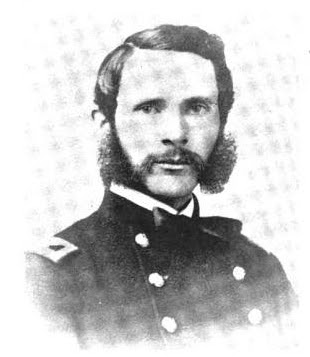
Patrick O'Rorke was born in County Cavan, Ireland 25 march 1837. When just one year old his parents emigrated to America. By 1842 he was living in Rochester, New York. He was an intelligent man, being awarded a scholarship to the University of Rochester when he was 16. He turned down that scholarship in order to help support his mother and the rest of his family.
In 1857 he would become a cadet at the US Military Academy at West Point. He graduated first in his class and was commissioned to the Corps of Engineers in June 1861.
The Civil War
In September 1862 he was appointed colonel of the 140th New York Infantry which was composed mostly of volunteers from Rochester. He led the 140th at the Battles of Fredericksburg and Chancellorsville.
During the second day of the Battle of Gettysburg O'Rorke led his men to the defense of Little Round Top which was in danger of falling into rebel hands. Despite heavy casualties they helped hold the ground. During the fighting O'Rorke caught up his regimental colors and, mounting a rock he urged his men to continue the fight. They pushed back the 4th and 5th Texas. Thirty-Six of their men were killed, 78 wounded, and 18 were missing.
Colonel O'Rorke continued to lead his men for the rest of the war. Two of the more costly battles they fought in were the The Battle of the Wilderness and the Battle of Cold Harbor. At Five Forks, Virginia one of O'Rorke's men, First Sergeant Robert F. Shipley, captured the flag of the 9th Virginia Infantry in hand-to-hand combat. Shipley would be awarded the Congressional Medal or Honor.
New York Assembly
After leaving the Army in late 1869 O'Rorke returned to Rochester with his wife and three children. He was a hero in Rochester and turned that popularity into a successful campaign for New York State Assembly. He ran as a Republican defeating Democrat George D. Lord in the November 1870 election.
In 1874 during the 97th New York State Legislature session he met and befriended fellow Republican Assemblyman, Hamilton Fish II. Fish's father was the U.S. Secretary of State for President Grant's administration.
O'Rorke did not run for re-election in 1876. He had received an offer to help Hamilton Fish, Sr. on an important project in Washington.
US Department of State
Patrick O'Rorke's excellent military record, knowledge of engineering, and connections with Hamilton Fish and President Grant gave him a post with Secretary of State. They wanted his help with negotiations and planning for an inter-oceanic canal in Nicaragua. Negotiations were successfully completed in late March 1877 with O'Rorke's contributions. It was at this point the new President, Rutherford B. Hayes, came into office and created his own cabinet. Hamilton Fish was replaced. Patrick O'Rorke was kept on and placed in charge of the Nicaraguan Canal project.
Nicaraguan Canal Company
After moving his family down to Washington, DC O'Rorke worked full time on the canal project. He would have to spend more than half of his time in Nicaragua surveying sites and overseeing local operations. It was estimated that the project would take fifteen to twenty years to complete. Unlike all estimates it ended up being optimistic – the project took nearly thirty years and cost considerably more blood and treasure than was imagined.
None of the near catastrophic problems with the construction of the canal can be blamed on Patrick O'Rorke however. Unfortunately he died in 1879 of malaria at the age of 42. He left behind his wife, Clara as well has three children – his son Neil, and daughters Mary and Eileen. His body was returned to Rochester and buried in the Holy Sepulchre Cemetary.
It has been wondered by many how the Nicaraguan Canal project would have turned out if Patrick's life had not been cut short. Would he have had the intelligence and strength of character to keep the worst problems from being as severe.
NOTES
Lt. Colonel O'Rorke was killed on 2 July 1863 defending Little Round Top at Gettysburg. He was still young (26 years old) and intelligent. It was 150 years ago today that he died. This is an alternate history to honor one of my hometown's Civil War heroes.
*Patrick O'Rorke over at Wikipedia (a portion of this post is taken from the entry on O'Rorke and the 140th.
*Robert F. Shipley
*140th New York Volunteer Infantry Regiment
The images are also from Wikipedia. Both are public domain due to their age.
In 1857 he would become a cadet at the US Military Academy at West Point. He graduated first in his class and was commissioned to the Corps of Engineers in June 1861.
The Civil War
In September 1862 he was appointed colonel of the 140th New York Infantry which was composed mostly of volunteers from Rochester. He led the 140th at the Battles of Fredericksburg and Chancellorsville.
During the second day of the Battle of Gettysburg O'Rorke led his men to the defense of Little Round Top which was in danger of falling into rebel hands. Despite heavy casualties they helped hold the ground. During the fighting O'Rorke caught up his regimental colors and, mounting a rock he urged his men to continue the fight. They pushed back the 4th and 5th Texas. Thirty-Six of their men were killed, 78 wounded, and 18 were missing.
Colonel O'Rorke continued to lead his men for the rest of the war. Two of the more costly battles they fought in were the The Battle of the Wilderness and the Battle of Cold Harbor. At Five Forks, Virginia one of O'Rorke's men, First Sergeant Robert F. Shipley, captured the flag of the 9th Virginia Infantry in hand-to-hand combat. Shipley would be awarded the Congressional Medal or Honor.
New York Assembly
After leaving the Army in late 1869 O'Rorke returned to Rochester with his wife and three children. He was a hero in Rochester and turned that popularity into a successful campaign for New York State Assembly. He ran as a Republican defeating Democrat George D. Lord in the November 1870 election.
In 1874 during the 97th New York State Legislature session he met and befriended fellow Republican Assemblyman, Hamilton Fish II. Fish's father was the U.S. Secretary of State for President Grant's administration.
O'Rorke did not run for re-election in 1876. He had received an offer to help Hamilton Fish, Sr. on an important project in Washington.
US Department of State
Patrick O'Rorke's excellent military record, knowledge of engineering, and connections with Hamilton Fish and President Grant gave him a post with Secretary of State. They wanted his help with negotiations and planning for an inter-oceanic canal in Nicaragua. Negotiations were successfully completed in late March 1877 with O'Rorke's contributions. It was at this point the new President, Rutherford B. Hayes, came into office and created his own cabinet. Hamilton Fish was replaced. Patrick O'Rorke was kept on and placed in charge of the Nicaraguan Canal project.
Nicaraguan Canal Company
After moving his family down to Washington, DC O'Rorke worked full time on the canal project. He would have to spend more than half of his time in Nicaragua surveying sites and overseeing local operations. It was estimated that the project would take fifteen to twenty years to complete. Unlike all estimates it ended up being optimistic – the project took nearly thirty years and cost considerably more blood and treasure than was imagined.
None of the near catastrophic problems with the construction of the canal can be blamed on Patrick O'Rorke however. Unfortunately he died in 1879 of malaria at the age of 42. He left behind his wife, Clara as well has three children – his son Neil, and daughters Mary and Eileen. His body was returned to Rochester and buried in the Holy Sepulchre Cemetary.
It has been wondered by many how the Nicaraguan Canal project would have turned out if Patrick's life had not been cut short. Would he have had the intelligence and strength of character to keep the worst problems from being as severe.
NOTES
Lt. Colonel O'Rorke was killed on 2 July 1863 defending Little Round Top at Gettysburg. He was still young (26 years old) and intelligent. It was 150 years ago today that he died. This is an alternate history to honor one of my hometown's Civil War heroes.
*Patrick O'Rorke over at Wikipedia (a portion of this post is taken from the entry on O'Rorke and the 140th.
*Robert F. Shipley
*140th New York Volunteer Infantry Regiment
The images are also from Wikipedia. Both are public domain due to their age.
20 March 2013
US Presidential Election of 2012
Back in August 2012 I planned on starting a blog where each month I would blog a year into the future and build off my past predictions. August 2012 would be 2012, September 2012 would be 2013, etc. (and today, being March 2013, I'd be blogging about the year 2019 if I actually started that blog!) The more I thought about this project the less enthusiastic I became. While I try to keep up on science and politics and everything else, I felt it wouldn't be the best use of my blogging time.
While going through my computer cleaning up files I did find the first blog post I was going to make for Blogging to the Future. Here it is since it now fits the alternate history mold.

UNITED STATES PRESIDENTIAL ELECTION 2012
November 6, 2012
The hotly contested United States Presidential Election takes place. Across the country there are a number of voting irregularities as well as reports of voter intimidation and other problems. Despite this it becomes clear by the end of the night that President Obama has won a second term.

Results of 2012 Presidential Election in the United States
RESULTS
Barack Obama (Democrat) 49.20% 318 Electoral Votes
Mitt Romney (Republican) 47.90% - 220 Electoral Votes
Gary Johnson (Libertarian) 2.10% - 0 Electoral Votes
Jill Stein (Green) 0.55% - 0 Electoral Votes
Virgil Goode (Constitution) 0.15% - 0 Electoral Votes
All Others 0.10% - 0 Electoral Votes
The Libertarian Party has it's best showing in a Presidential election ever, but not nearly as well as they were hoping given the current economic and political conditions in the nation. Too many voters seemed to have panicked pulling the lever against one of the two major parties.
The House of Representatives stays strongly in the hands of Republicans. The Democrats keep control of the Senate by an even more narrow margin. Gridlock is seen for the next four years. Within weeks the major cable news channels begin wasting time discussing options for the 2016 election.

My guesses in August were pretty close for the most part. The only states I was wrong about were Florida and North Carolina. I was also way off with the percentage of the votes which the third parties got.
While going through my computer cleaning up files I did find the first blog post I was going to make for Blogging to the Future. Here it is since it now fits the alternate history mold.

November 6, 2012
The hotly contested United States Presidential Election takes place. Across the country there are a number of voting irregularities as well as reports of voter intimidation and other problems. Despite this it becomes clear by the end of the night that President Obama has won a second term.

Results of 2012 Presidential Election in the United States
RESULTS
Barack Obama (Democrat) 49.20% 318 Electoral Votes
Mitt Romney (Republican) 47.90% - 220 Electoral Votes
Gary Johnson (Libertarian) 2.10% - 0 Electoral Votes
Jill Stein (Green) 0.55% - 0 Electoral Votes
Virgil Goode (Constitution) 0.15% - 0 Electoral Votes
All Others 0.10% - 0 Electoral Votes
The Libertarian Party has it's best showing in a Presidential election ever, but not nearly as well as they were hoping given the current economic and political conditions in the nation. Too many voters seemed to have panicked pulling the lever against one of the two major parties.
The House of Representatives stays strongly in the hands of Republicans. The Democrats keep control of the Senate by an even more narrow margin. Gridlock is seen for the next four years. Within weeks the major cable news channels begin wasting time discussing options for the 2016 election.

My guesses in August were pretty close for the most part. The only states I was wrong about were Florida and North Carolina. I was also way off with the percentage of the votes which the third parties got.
Subscribe to:
Posts (Atom)