11 March 2014

Happy Birthday to Othertimesblog!

On March 11, 2013 this blog started. It had been one year - and it has also been a lot of fun. Time to take a quick look back and see where we've been:

My Three Favorite Posts
1) Greater Canada
2) The first post in my eventual series on an Alternate American Civil War!
3) Another post I had big plans on expanding on involving A Misfiring Gun at Gettysburg

Top Five Posts (not counting Friday Flag posts) based on page views
Many of these are the same as the ones in my end of 2013 post.
1) Greater Canada
2) Kingdom of Alaska: Really not a good post. Based off my first game of Victoria II where I just wanted to learn the rules and watch what the computer controlled countries did
3) Book Review - GURPS Alternate Earths: An awesome resource for running an alternate universe campaign in GURPS
4) Confederation of European States: The first timeline I created for this blog
5) Alternate Geology: A brief look at how the geography of the Earth could vary in alternate timelines


My own favorite image of the year
Looking through my current image gallery for this blog I see a lot of flags. I'll do more with them starting next week with my Top Flag Championship series. Out of the remainder of the images my personal favorite is this map I made for my alternate American Civil War:


It reminds me that I have to revisit this timeline and flesh out its history.

Do you have any favorite posts from the last year? Which ones?

What sort of alternate histories interest you the most? I have a number coming up over the next few months that will have divergence points in the early 20th century, but I don't want to limit myself too much.

February 2014 has had the highest number of page views of the last 12 months. Thanks for visiting. I hope the next twelve months will put this blog's first year to shame. I do plan to have more than 45 posts over the next year.

As I mentioned above next week will be round one of my Top Flag Championship. Eight pairs of flags will be facing off to see who is the favorite. Voting will be done in the comments section and each week will be a new round until one flag becomes the Top Flag!

07 March 2014

Friday Flag - Sino-Soviet Alliance


In 1951, months after the Peoples' Republic of China entered the Korean War, United Nations forces were escalating their attacks to drive out the new invader. The Soviet Union became increasingly alarmed with the combat taking place near its border. When an American atomic bomb was dropped on Chinese troop concentrations in China the Soviet Union withdrew from the United Nations taking the other communist bloc nations with it.

An informal military alliance was forged between the Soviets and Chinese. Russian military forces were shifted to the east and entered the Korean War. Panic of the war spreading to Europe, which still was in ruins from the Second World War, caused mass migrations and a majority of people to move out of West Berlin to more secure areas of West Germany.

IN 1952 The Sino-Soviet Alliance, which includes the Warsaw Pact nations is forged. A new flag for the alliance is revealed. The first public use of the new flag is to fly it over the former West Berlin as it is annexed by the East in July.

The war continues for several more years in Korea with a catastrophic loss of life.

06 March 2014

The Baltic Event

On 30 June 1908 disaster struck the Earth. At 3:14 am local time the Baltic Sea, just south and east of Åland Islands.

A tsunami was caused by the impact. The angle and velocity of the impact sent a larger portion of the water east. A huge wave was funneled down the Gulf of Finland. Coastal areas along the way were devastated. Helsinki, Tallinn along with other larger settlements are devastated. Some smaller villages are completely washed away. The tsunami actually intensifies as it travels down the Gulf. It strikes St. Petersburg with overwhelming force.

The Winter Palace is devastated and the Imperial Family is killed. Other centers of governmental power for the Russian Empire are destroyed. Governmental control is decapitated.

The Åland Islands have their surface obliterated. Waves pummel Stockholm and destroy a large portion of the Swedish government.

Less devastating waves finally reach the German Empire. While no-where near as destructive as the easterly and westerly waves it is enough to destroy a portion of the German Navy and to ruin a number of ships under construction in the shipyards.

Over the next decade and beyond the Russian Empire is in chaos. Revolution and separatist groups tear at the corpse of the Empire. After the first year of rebellions growing numbers of soldiers begin to long to return home knowing that their homelands may be in danger. Mutinies strike many of the regions of the military.

The United Kingdom, Germany, and France send as much aid as possible the the Baltic region. Denmark even occupies a portion of Swedish territory to 'protect' this humanitarian aid. They never leave.

The death toll of the Baltic Event is unknown but is in the hundreds of thousands. This is followed by starvation, disease, and in Russia's case War. As mentioned these wars span over a decade and give birth to dozens of new nations. By June 1918 this is a map of the region:


The nations existing out of the former territory of the Russian Empire include:
(1) The Russian Empire (in red), (2) Finland, (3) Poland, (4) Ukraine, (5) Kazakhstan, (6) Kara-Kyrgystan, (7) Uzbekistan, (8) Tajikistan, (9) Turkmenistan, (10) Azerbaijan, (11) Georgia, (12) Komi, (13) Maykopiya, (14) Elista, (15) Dagestan, (16) Chechnya, (17) Angusht, (18) Far East Federation, (19) Free Land of Bidzhan (Manchurian enclave), (20) Lesser Transbaikalia, (21) Yenisei, (22) Khakassiya, (23) Izhevsk Zavod, (24) Bashkortostan, (25) Tatarstan, (26) Cheboksaryia, (27) Mariy-El (28) Yakutiya, (29) Kabardiniya, (30) Batalpashinsk, (31) Ulala, (32) Kareliya, (33) Mongolia,

Russia if focusing on re-establishing control over the Caucasus region. It is also has poor relations with Kareliya and Komi, desiring that former territory as well. As of 1918 the borders of all of these nations are still not permanent. Ethnic groups are fighting for territory, resources, ancestral lands, and strategic locations to protect their territory. It will be another generation before things begin to stabilize.


I altered history on this one by changing the timing and exact nature of what was the Tunguska Blast on the OTL. A major change to astronomical events would really have a divergence point not too long after the Big Bang. This timeline is mostly to show how devastating things could have been if such an impact hit a little off course.

I might play around a bit with this one. Perhaps a post on a Polish-Ukrainian War, maybe one on the global reaction and changes due to such a devastating event.

A number of the new countries listed above were not even established by Russia until the 1920s. Due to my own lack of time and limited knowledge of 19th century Russia I've ignored a few things. A decade of civil wars is my excuse for anything that looks out-of-place.

I hope you enjoy. Feel free to leave comments.

05 March 2014

Book Review - The Divide

(image from Amazon.com)

William Overgard's The Divide is an alternate history tale involving a world where the Axis Powers won the Second World War. From what I could tell history diverged at a couple points, one being the election of an isolationist President in the United States and the second being a change in Germany's tactics that allowed them a quick victory over Britain.

THE STORY
It is 1976. Two-hundred years since the Declaration of Independence and thirty years since the United States surrendered to the Axis. The elderly Hitler and Tojo plan a historic meeting in the center of America at a place they call the Divide. America has been a peaceful place for a number of years, no real uprisings, citizens being willing slaves to their German and Japanese masters. All that is about to change.

A number of people get involved in setting the stage for a new American Revolution. It starts with the bizarre assassination of a Japanese general on the Fourth of July. The story then jumps between various characters - the trio of freedom fighters and their interactions with other rebel elements, an SS officer tasked with destroying the resistance, and other people whose lives are touched by the ongoing events.

Pieces start to fall in place and all of the threads lead to the meeting of the two rulers at the Divide. There are plenty of set-backs and a few twists and turns along the way.

Overgard's style is interesting. There is a tendency to introduce new information and then spend a few pages telling the back-story of that new information, usually in the form of flashbacks. While this works in most cases, there were a couple of times I wished he would shorten some of the flashbacks and keep going with the events in the 'present'.

THE CHARACTERS
The Old Man (Wayne Stubbs) is the main character of the story. He has a checkered past involving accidentally injuring a prostitute, indirectly causing his wife to commit suicide, and then wounding another prostitute in an attempt to kill her while suffering the rage and despair following his wife's death. He then fled to Canada and eventually made his way back after America fell to the Axis. Not the most heroic of backgrounds but he now feels he has to make up for the past by saving the country's future.

The Cowboy (Cooper): This young man was raised by The Old Man. He was raised to be a hero and to be an inspiration for others in the coming revolution. He plays his role well but gets caught up in his first real encounters with women (he and The Old Man lived a very isolated and hobo-like lifestyle).

Claus Dieter is the antagonist from the SS. He is on the trail of the heroes after the July 4th assassination. He is an evil and deceitful man who, while smart, is usually in over his head. He tries to destroy the resistance while keeping his superiors from getting rid of him for any failures.

In addition there are numerous other characters, an Amerind girl, a Jewish woman who is putting the finishing touches on her father's bomb, and many others. Most of the characters are interesting and the liberal use of flashbacks in the novel gives us all the information we need about them.

FINAL ANALYSIS
A great story overall. I have mentioned the sometimes annoying use of flashbacks, but there were only a couple of places that this really bothered me. The ending, while it wrapped up the main story, did not reveal the eventual results of the new Revolution. In fact the last page was about Hitler's daughter being pregnant. I'm not sure if this was to set up a sequel or just to establish that history keeps chugging along, even after some really historic events take place.

As with life, there are not happy endings, just another day and new challenges following the last.

I gave this book 3 out 5 stars when I rated it on Goodreads. It's better than a three but not quite a 4. I was in a phase of not inflating my ratings with too many 4 and 5 stars.

PUBLISHER: Jove Publications, Inc.; copyright 1980 by William Overgard
GENRE: Alternate History
PAGE COUNT: 244
ISBN: 0-515-05492-5

28 February 2014

Friday Flag - United States of America


The flag of the United States of America under the Articles of Confederation and then the early days under the Constitution. The state of Saint Lawrence declined entry to either organization after the Revolution. The thirteenth stripe and star were removed from the revolutionary flag when the new nation was forged.

23 February 2014

This Week in Alternate Histories - February 17 to 23

Here is something new. A quick review of events that took place from February 17 to 23 at some point in the history of a number of the alternate timelines I've created so far. Not sure if I'll do this every week. Let me know what you think.

February 17: 2002 - French Foreign Legion is deployed to Algeria to hunt down Al-Qaeda operatives in that region. It is the beginning of yet another long and costly French occupation of that land. [Alpha-007]

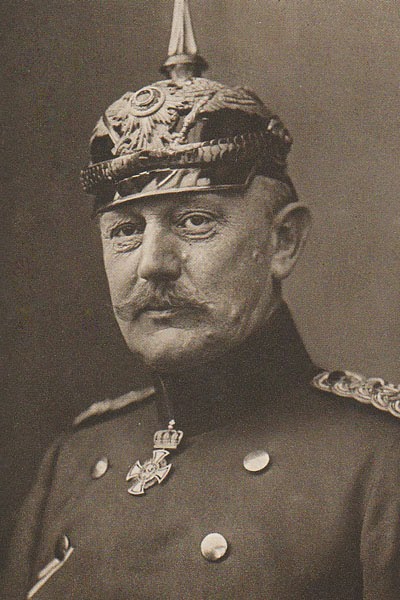
February 18: 1916 - Helmuth Johann Ludwig von Moltke (Moltke the Younger) dies of heart failure at the age of 67. He was the architect of German successes against Russia in the early days of war before his retirement due to failing health. [Alpha-012]


February 19: 2693 BC (2714 GC) - Lophrotus warlord, Lethclyda, commands a fleet of large war canoes across the sea to sack the coastal capital of Văn Lang in what would be known as Indochina in other timelines. The death toll to the humans is large and most of the settlement is put to the torch. Weeks later the new capital of Văn Lang would be established further inland for protection. [Beta-002]

February 20: 2004 (2575 AUC) - The main generator of the Roman Luna Colony Alpha suffers a critical failure. Safety protocols keep the reactor from melting down. Rapid response from nearby colonies help keep the death toll at only six with over a hundred in need of medical attention for excessive radiation exposure. [Alpha-005]

February 21: 1859 - Oregon is admitted to the United States of America as a state. They choose to be a free state and elect John Whiteaker, a Democrat, as governor. [Beta-001]

February 22: 1894 - The Governor of Texas, James S. Hogg, is shot and killed during a misunderstanding as he was poaching on government land. [Alpha-008]


February 23: 1916 - Portugal refuses British demands that they seize over 70 German vessels that are in Portuguese ports. This leads to a sharp decline in relations between the two nations. [Alpha-001]

NOTES
Some wikipedia articles for further information:
*Moltke the Younger (source for image)
*Văn Lang - ancient civilization
*James S. Hogg (source for image)

13 February 2014

Alternate Great Lakes

Sorry about the lack of recent posts. Work and feeling under the weather took up a chunk of time (and learning how to play EUIV). Right now I'm trying out my new desk treadmill system and walking at a zippy 1mph as I type and edit an image. Once I build some extensions for my desk it should be a cool set-up and help me stay in a shape other than round.

So for this latest update I'm looking at the North American Great Lakes. I live near one of them and I have to say it can be nice. Back in elementary school I was told the Great Lakes and Finger Lakes were created by the glaciers during the last ice age. Nice of them to do so given the general pain in the butt glaciers made life for early humans.

So I got to thinking: What if the lakes ended up looking a bit different. Some different variations in the ice sheet or other factors I should really research could have given us different lakes than the ones were are accustomed to. So here is a sketch I made of one possibility. I'll next have to dig up some old maps from National Geographic and refine the shapes of these with a better eye on actual geological factors.


might be a little difficult to see but I enlarged the analog of Lake Ontario and have it exit down the Mowhawk Valley then Down the Hudson Valley instead of the St. Lawrence River. I also picture large swamps where Illinois would be.

What do you think? What sort of changes in the eventual European colonization would happen? How wold local tribes and nations be different?
Related Posts Plugin for WordPress, Blogger...